
of sustainable
architecture
Insulated glass units
Insulated glass units are one of the most important construction materials in modern architecture. Thanks to the use of appropriate components and processing technologies, insulated glass units can perform many functions.
Types
of insulated glass units
In modern construction there is a variety of challenges facing transparent wall partitions. Thanks to modern solutions insulated glass units can protect against the loss of heat, prevent over-heating, protect against noise and provide a temporary protection against burglary.
A glazed unit consists of at least two panes of glass which create an internal cavity filled with air or other gas, separated and sealed around the perimeter using a multi-stage insulating process with a spacer bar, sealing compounds and water vapour adsorbents (desiccants).
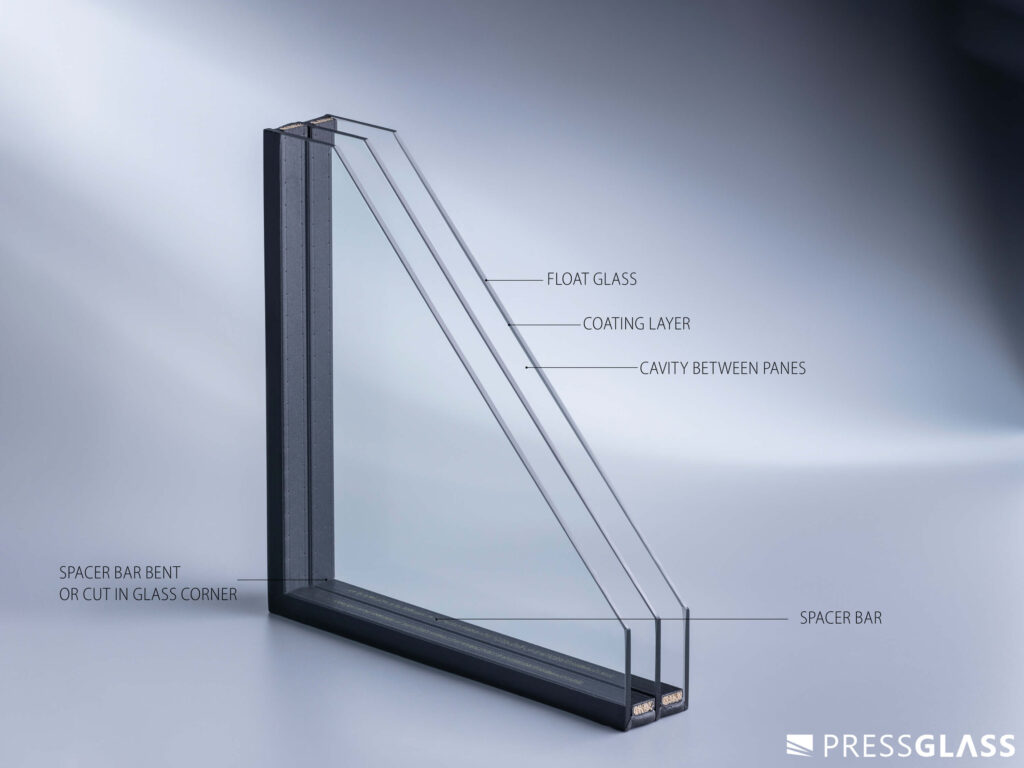
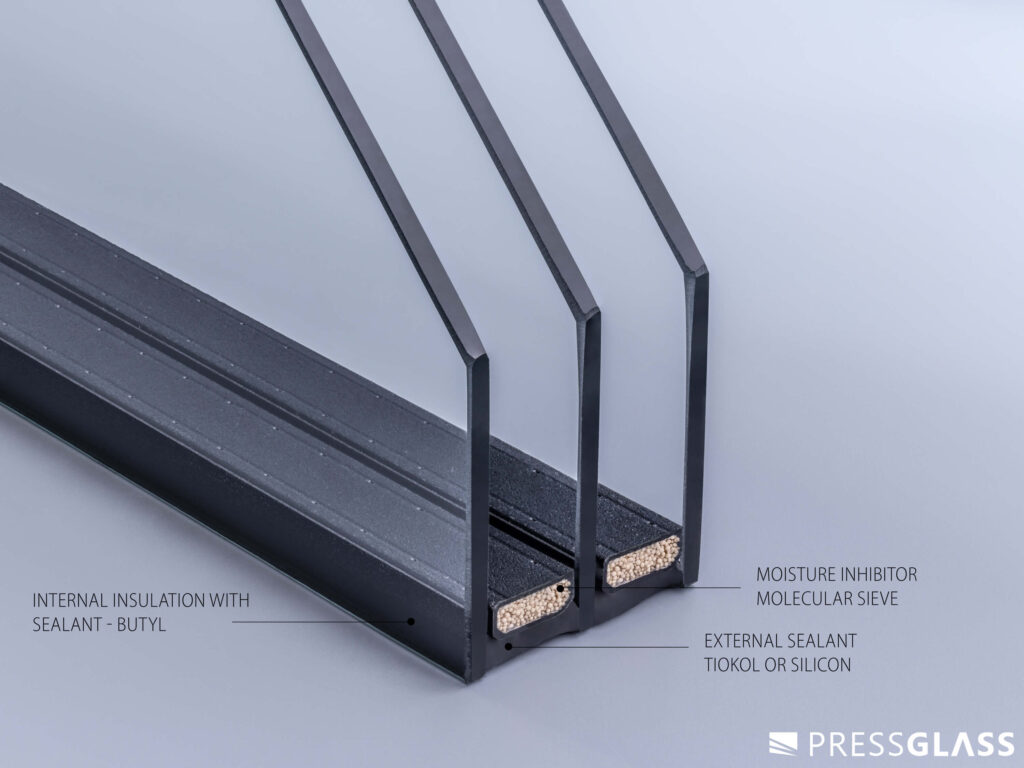
Air tightness
of insulated glass units
An important criterion considered when evaluating insulated glass units is their air tightness against moisture penetration into the glass and loss of gas, with which the glass is filled to improve thermal or acoustic properties.
The current solutions used by PRESS GLASS provide high air tightness of insulated glass units for seals with a curved or cut spacer bar at the corners.
Insulated glass units
with pressure equalization
PRESS GLASS offers insulated glass units with pressure equalization (Altimeter). Adjusting the volume of gas inside the insulated glass unit to the conditions at the installation site minimizes the phenomenon of glass deformation and the risk of mechanical damage to the insulated glass unit. Both of these phenomena are caused by pressure and temperature differences between the production site and the installation site. For more information, read below.
Glass insulating process
Specifications
| Maximum measurement of insulated glass units | 7000 x 3200 mm |
| Minimum measurement of insulated glass units | 180 x 350 mm |
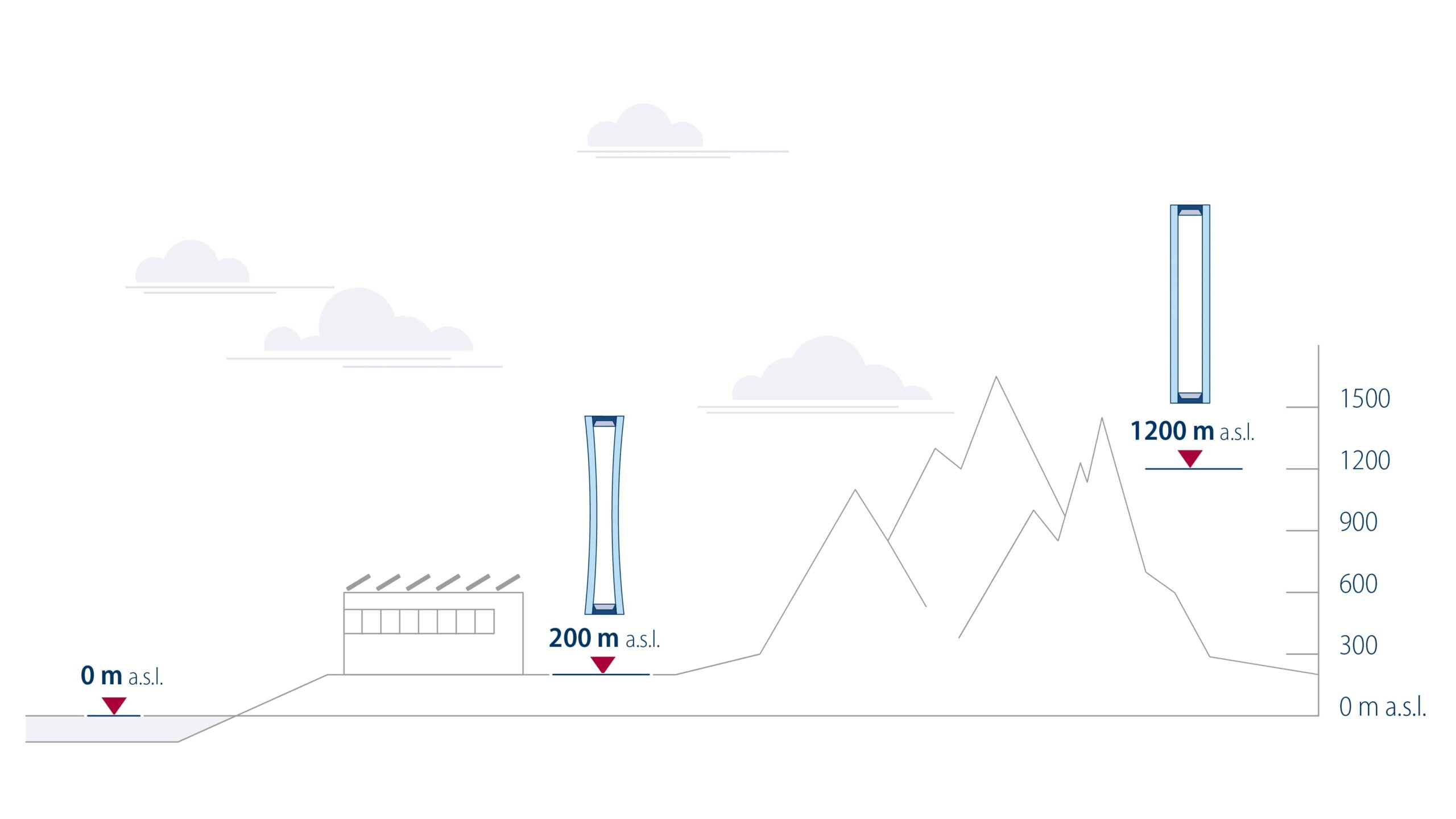
Pressure equalization in insulated glass units is designed to minimize the phenomenon of glass deformation and the risk of mechanical damage to the insulated glass unit. Both of these phenomenon are caused by pressure and temperature differences between the production site and the installation site.
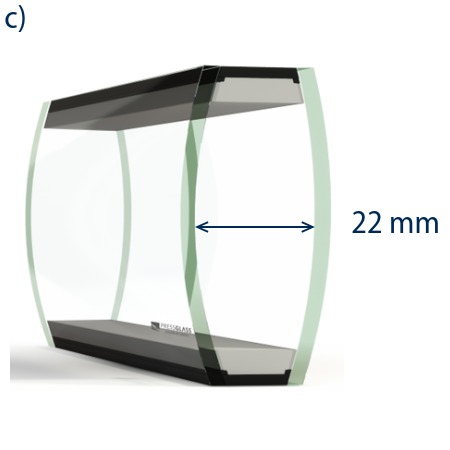
Deflection of glass due to pressure change with elevation change (meters a.s.l.):
a) glass without deflection – the height of production of insulated glass units
b) concave glass – height below the production of insulated glass units
c) convex glass – height above the production of insulated glass units
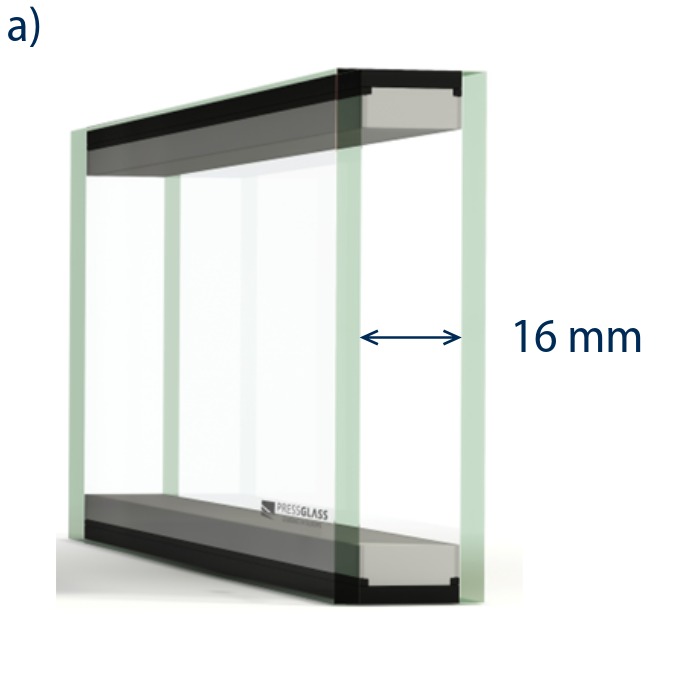
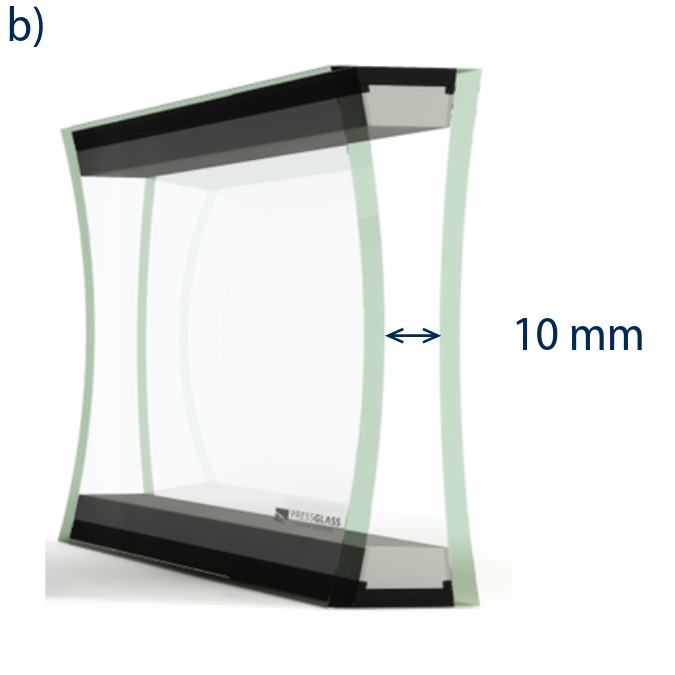
Using the ISO Altimeter PROFESSIONAL device, we adjust the volume of gas inside the insulated glass units to the conditions at the installation site, taking into account atmospheric pressure and temperature. As a result of this process, we create conditions thanks to which the pressure in the space between the glass units at the installation site equalizes to the external pressure and the insulated glass unit is relatively flat. This process does not require additional processing after installation.
The selection of measurements, structure, type of glass used, properties of insulated glass units should result from project calculations that take into account the conditions of its applications. The responsibility for these calculations lies with the customer.
Requirements for the implementation of orders of glass with pressure equalization, Altimeter:
- pressure equalization is required for glass installation altitudes above 700 m above sea level,
- the minimum width of the space bar is 12 mm,
- installation of window dividers is allowed with the applications of toughened glass only and the required difference of 6 mm between the thickness of the frame and the window divider,
- pressure equalization is possible in insulated glass units with irregular shapes (figures), as long as it is within the scope of previous manufacturing processes,
- the maximum height of transport must not exceed twice the difference between the height of assembly and production.
Data necessary to accept the order:
- average outdoor temperature of the glass installation site,
- maximum temperature inside the room where the glass is installed,
- installation height,
- transportation height.
Downloads

of sustainable construction